
In part one I went over how Ack Ack Attack! got from Unreal to Godot and what working with Claude Code looks like. This part is all the stuff that went wrong along the way, which for anyone else making games is probably the more useful bit anyway.
First up, those two generator bugs from 2024, doors turning up in odd places and rooms the corridors couldn't reach. In Godot they finally got pinned down properly. A door now needs a wall on both sides of it, Claude checked that over 200 random seeds without finding a single stray door, and the room connections got the same treatment over 250 seeds.
Then the enemies couldn't get to me. The props were cutting about a quarter of the open floor out of the path finding, so enemies would just grind into the walls, and in July the AI got rebuilt on Godot's own navigation server. Even after that some of them still wouldn't come into the rooms built inside the bigger rooms, and it took playtest rounds 7 through 12 to find out why. The doorways into those inner rooms had been baked on the wrong axis, so they were unreachable on every single map!
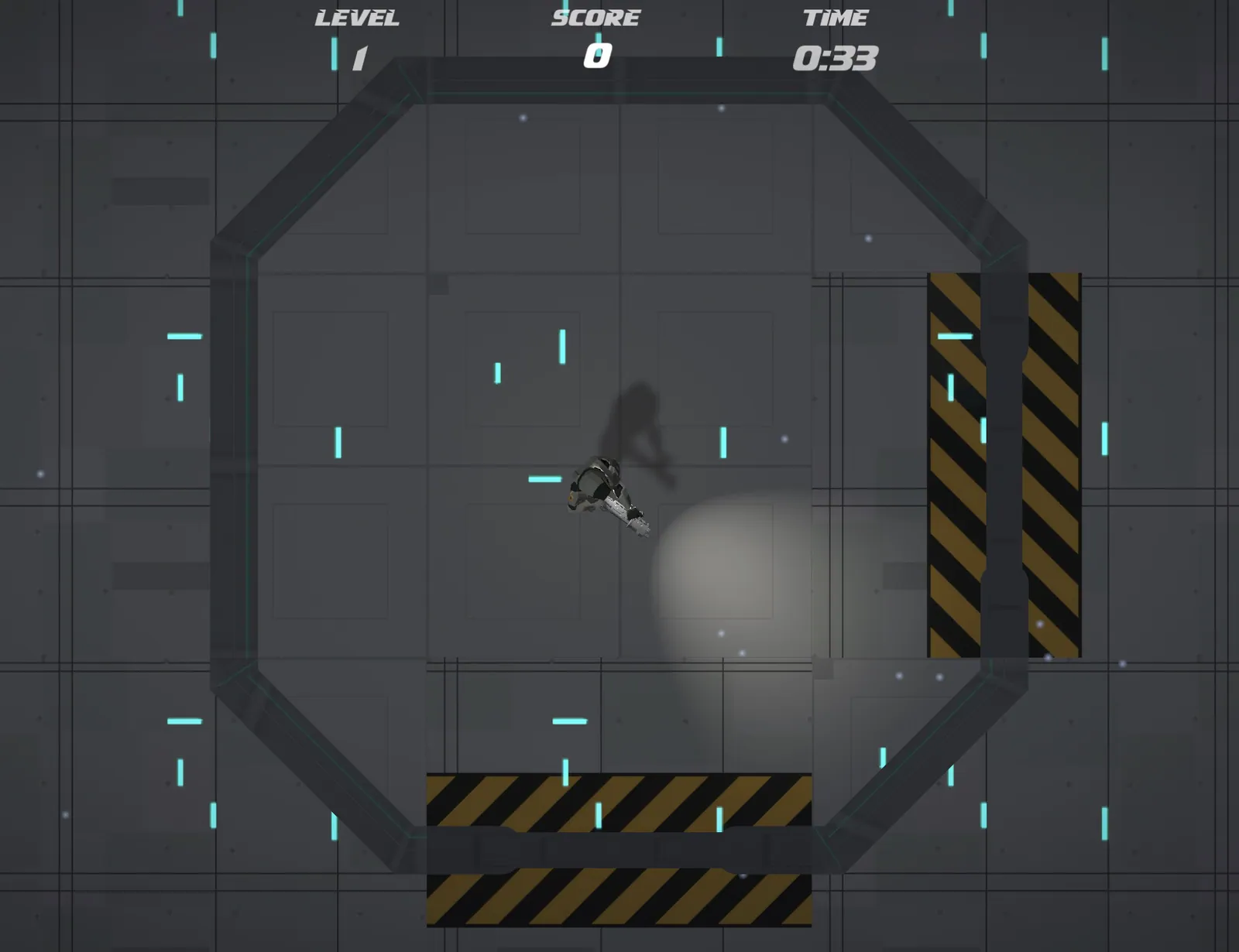
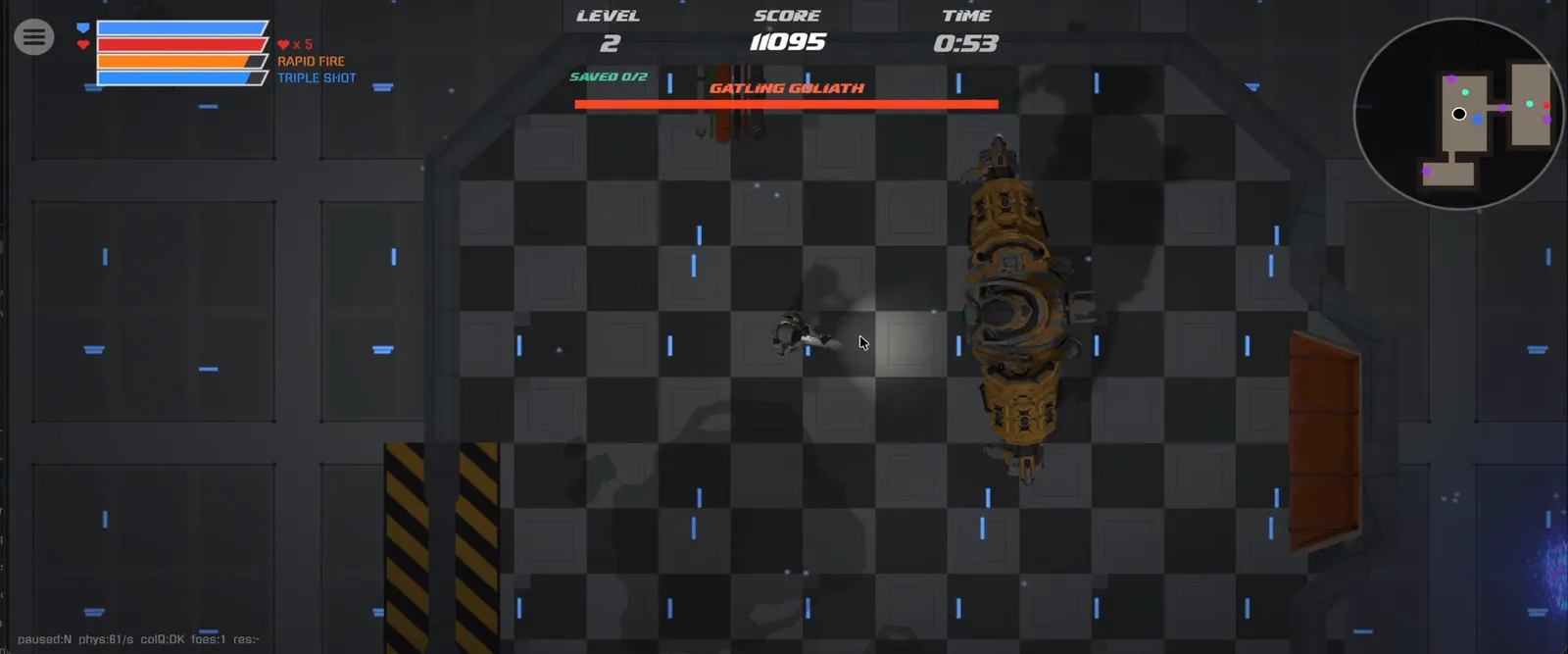
Then there were the shots. My guy holds the gun in his right hand, so the bolts never quite looked like they were coming from where he was aiming, and on June 28th it took five check-ins in one evening to sort out. Firing from the middle of him looked too far left, firing straight out of the barrel looked too far right, and splitting the difference still wasn't landing, until Claude worked out that the direction it was using for "right" actually pointed left on screen with the camera looking down, so every nudge to the right had been moving the bolts left!
Controllers were an odd one. A Bluetooth pad worked in game from June, it's just another pair of sticks after all, but the menus were a different story. The map was a tap on the minimap, so there was no way to open it on a pad at all ("we aren't using the a/b buttons at all", as I put it at the time). The main menu didn't work either, nothing is selected until you hover over something with the mouse and a pad doesn't hover, so every press went nowhere, and Godot doesn't hand a pad press to a focused button anyway. Once that was sorted the stick raced through the menu like a machine gun, because the stick had been put on Godot's ui actions, so it fired off menu presses as fast as it could. The lesson that went into the notes was "never put analog axes on ui_* actions". The options screen had its own one, A acted on the press and the release, so every toggle flipped twice and looked dead. That's what I meant back in my First Person post about the map and options menu needing a little more consideration!
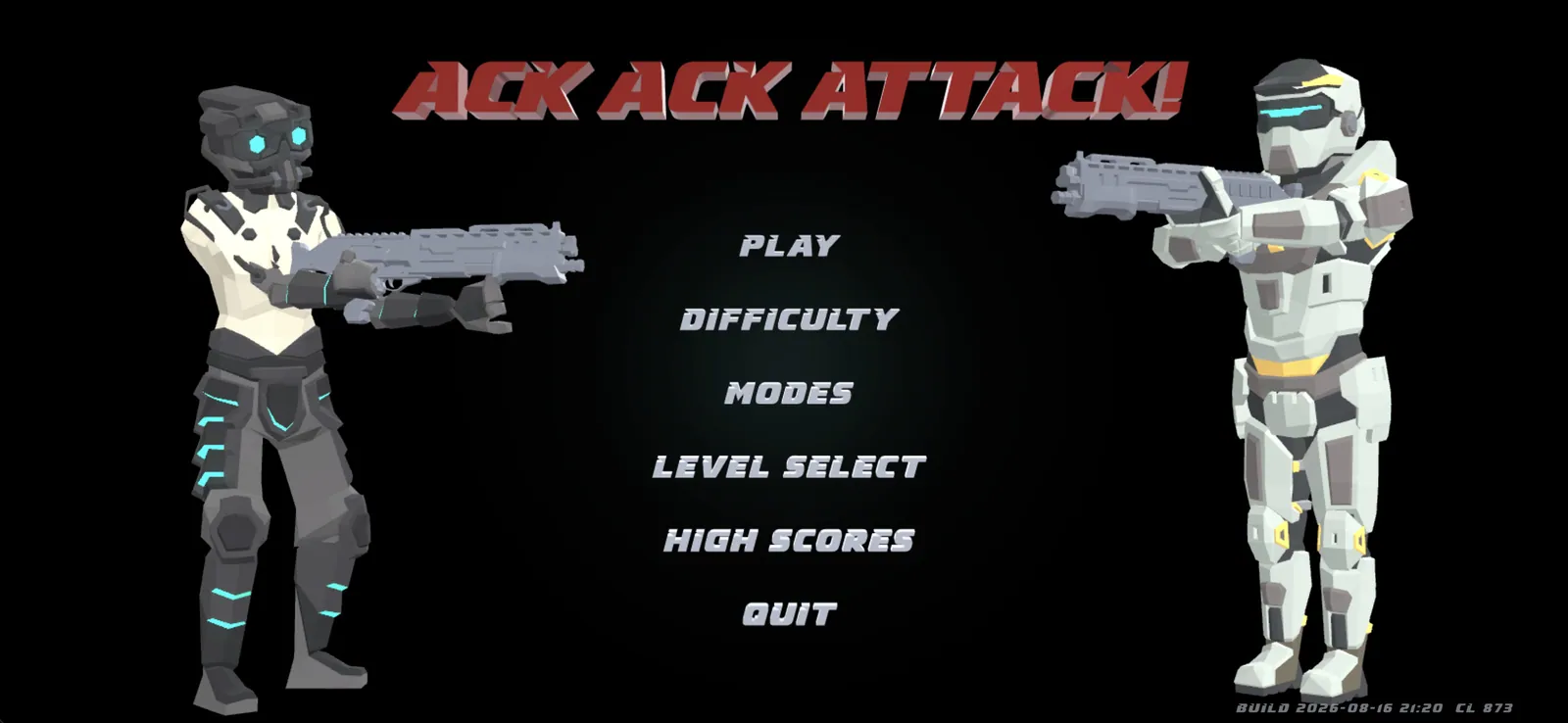
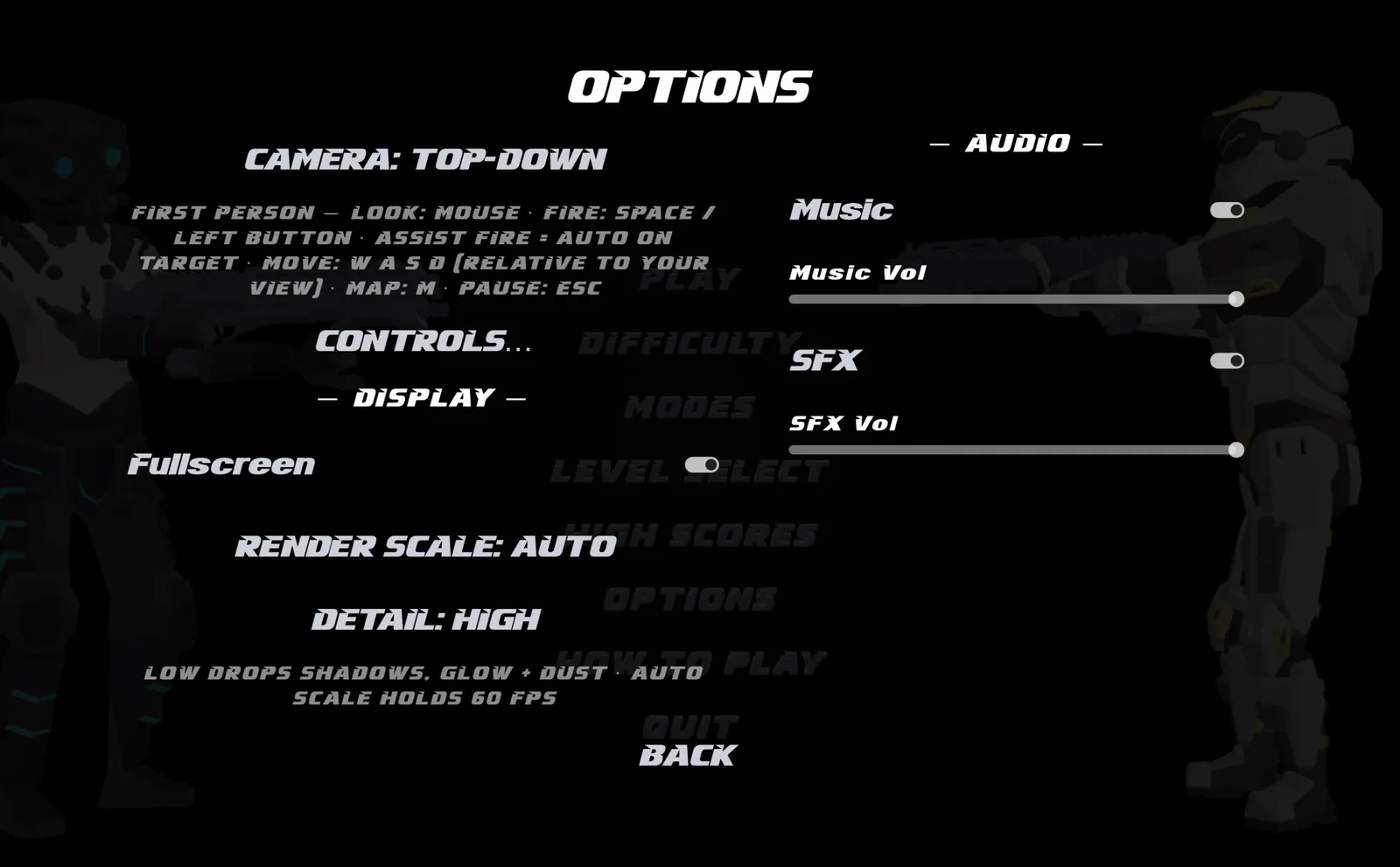
First person went in on August 18th as a bit of an experiment, and I liked it a lot ("I genuinely like this view, and wouldn't mind a toggle between 1st person and our main to give the game 2 different unique feels"). The problem was it was uncontrollable. The sticks and the mouse were aiming in world directions, which is fine looking down from above but falls apart as soon as the view turns with you, and testing it on the phone showed touch was just as bad. So the next day it all got reworked, the stick turns you instead of pointing, the mouse looks around, you move relative to where you're facing, and on touch it fires on its own when something is in your sights.
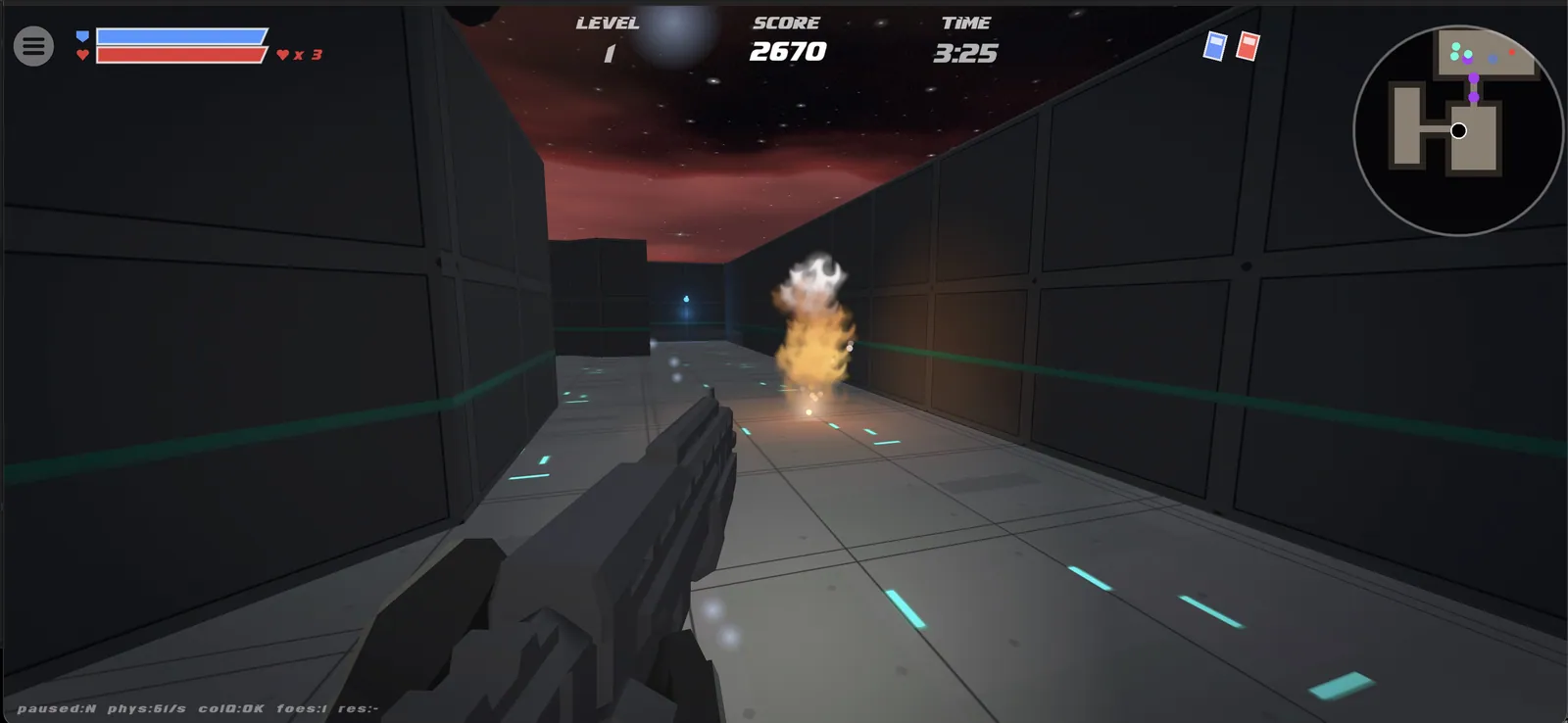
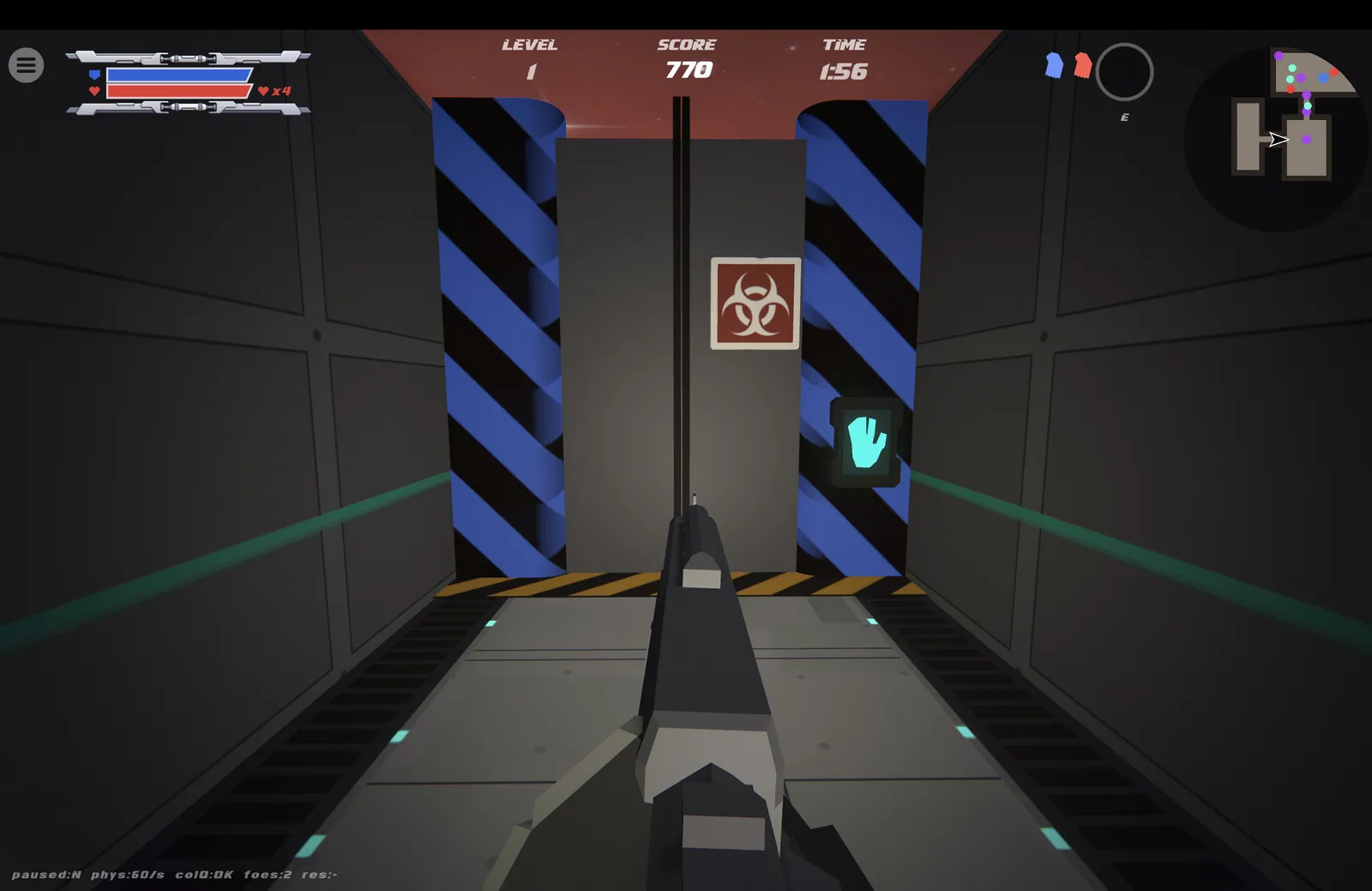
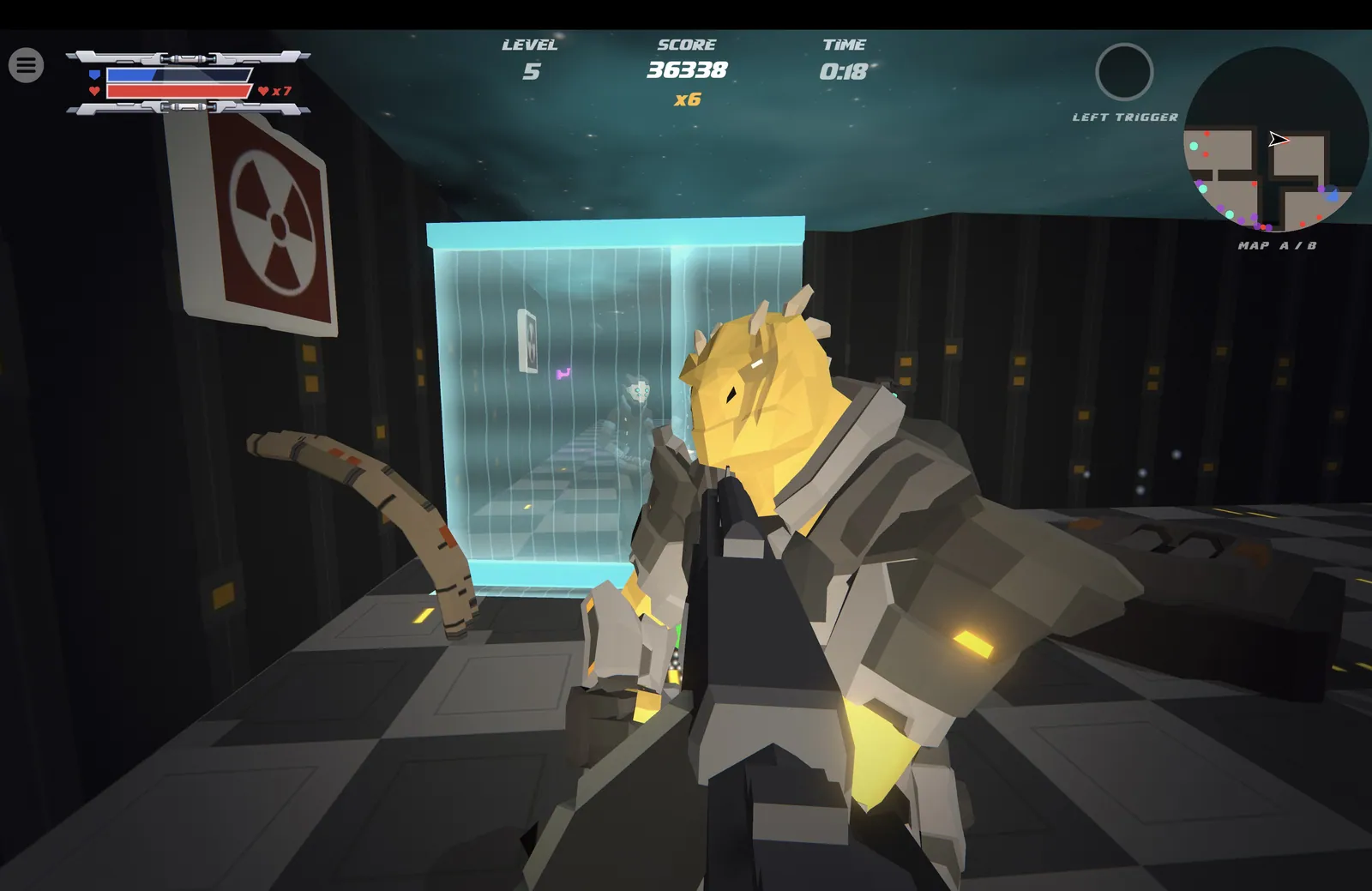
The last stretch threw up a few little ones I'm glad got caught. Just before it went off to Apple I was watching back a review video and spotted a slight hiccup when the first door opened, which turned out to be four repeated frames, about 67 milliseconds, while the door's see-through effect compiled a shader the first time it was used. That now gets warmed up behind the loading screen. The very first launch showed a grey screen for a couple of seconds (now it's black, with a "first run, compiling shaders" line), and then that line decided to show up on every level until that got sorted too. And when I asked what happens if you beat level 100, the answer was nothing, it just loaded deck 100 again, forever. Now you get CAMPAIGN COMPLETE and a credits scroll.
Having spent 26 years in studio IT, the stale builds were the ones that made me laugh. Early on an iOS export quietly only rebuilt the Xcode project and not the actual app, which cost me a playtest round, and later a tool tried to re-bake some files that were still read-only from Perforce, so it wrote nothing, said it had worked, and three builds came out stale. There's a rule in the notes now to build all three platforms together every time and never leave one behind.
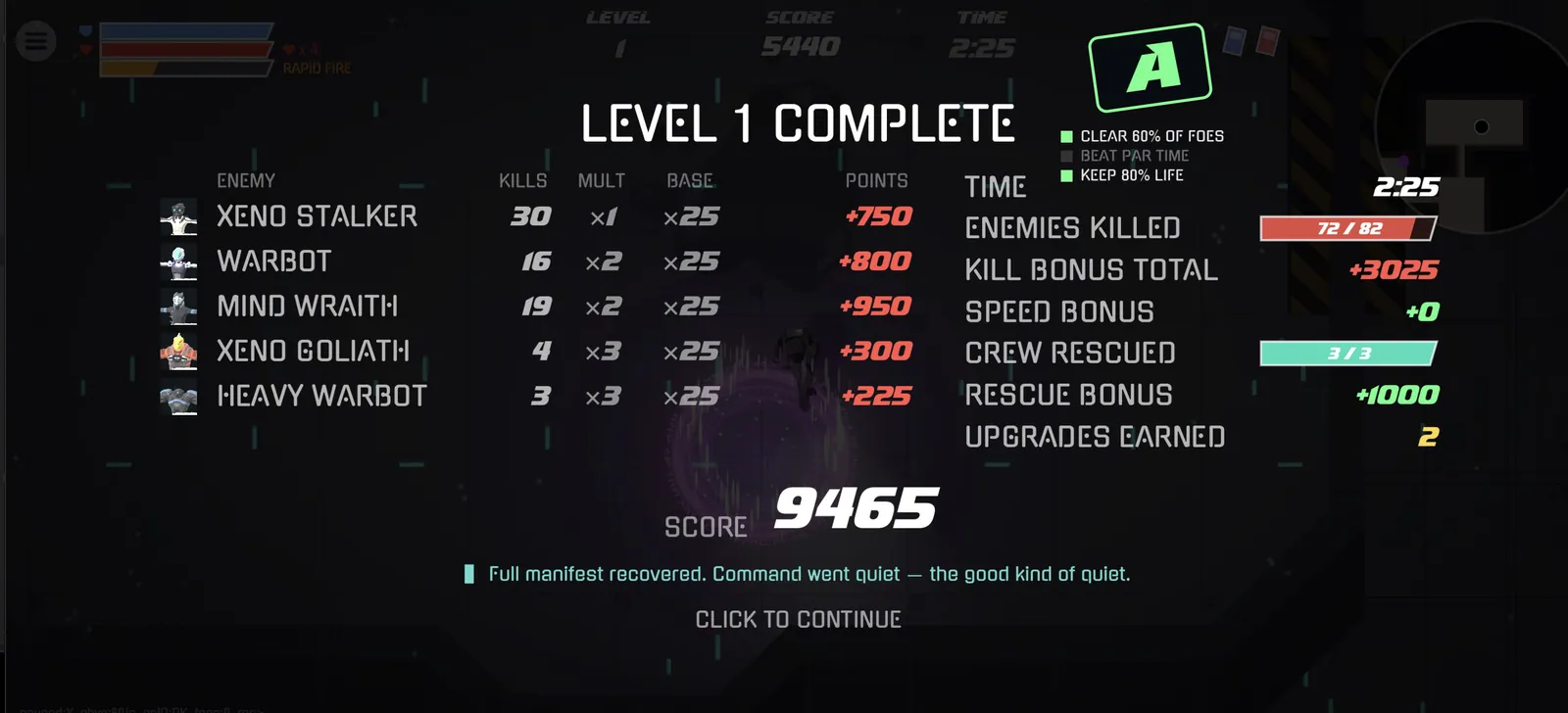
TestFlight started on September 14th, and if you were one of the testers you'll have seen the version numbers go from 1.0 up to 1.0.4, then two more that got pulled because only the build number is meant to change for an update, and then the App Store version went out as 1.0 anyway (it all finally lined up on 1.0.1 in October). September 26th is what the notes call release day, the itch.io demo went up that night, and 1.0 with the in-app purchase went off to Apple the next day, with the full game up on itch the day after. Apple bounced it because the purchase's promo image was just the app icon, and 1.0.1 was approved on October 18th. An optimisation pass before all that took the iPhone build from 236 MB down to 158 MB, and since the decks are all generated, the free demo ends up within about 24 KB of the full game. Same game, it just stops after deck 10!
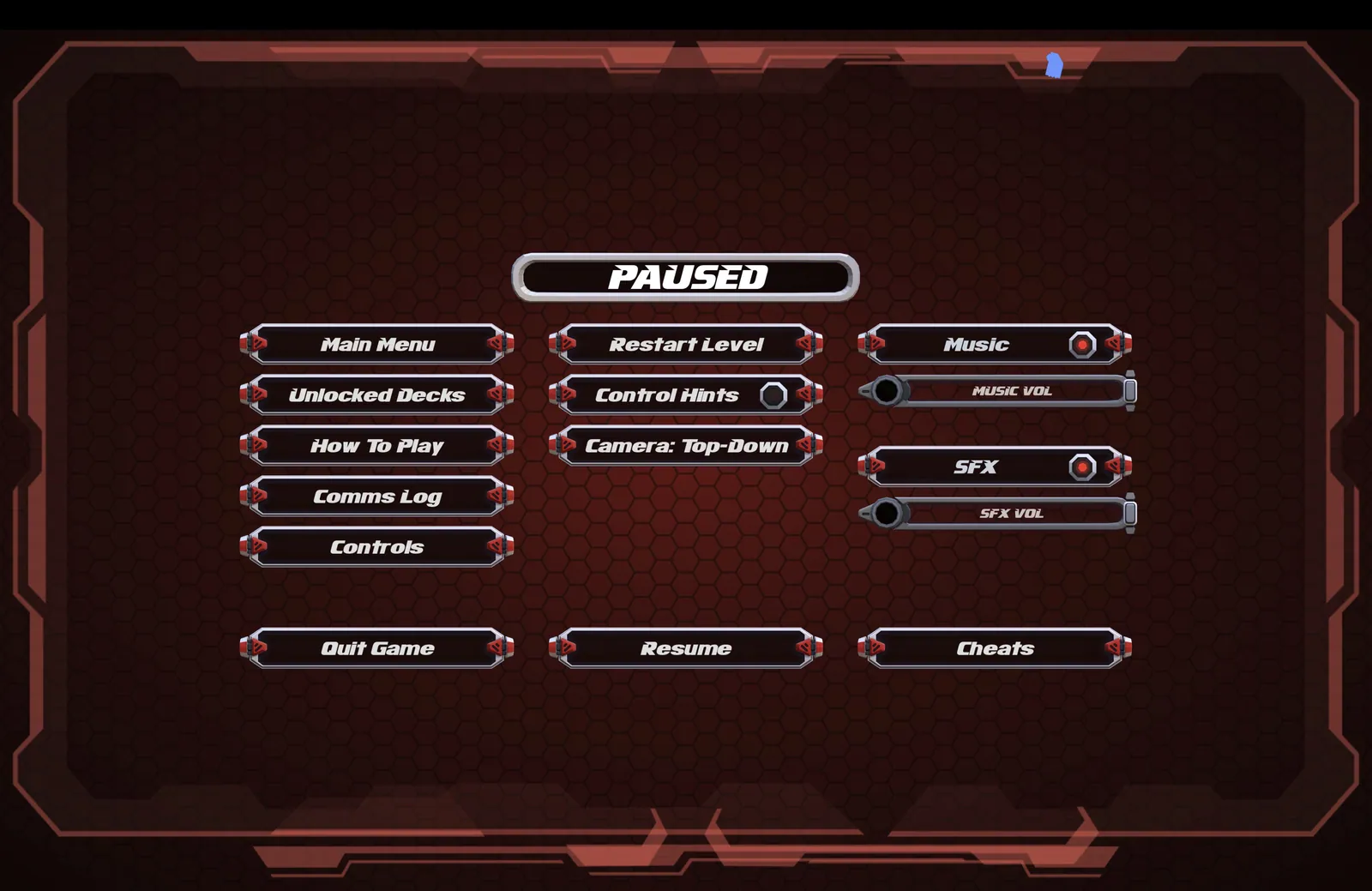
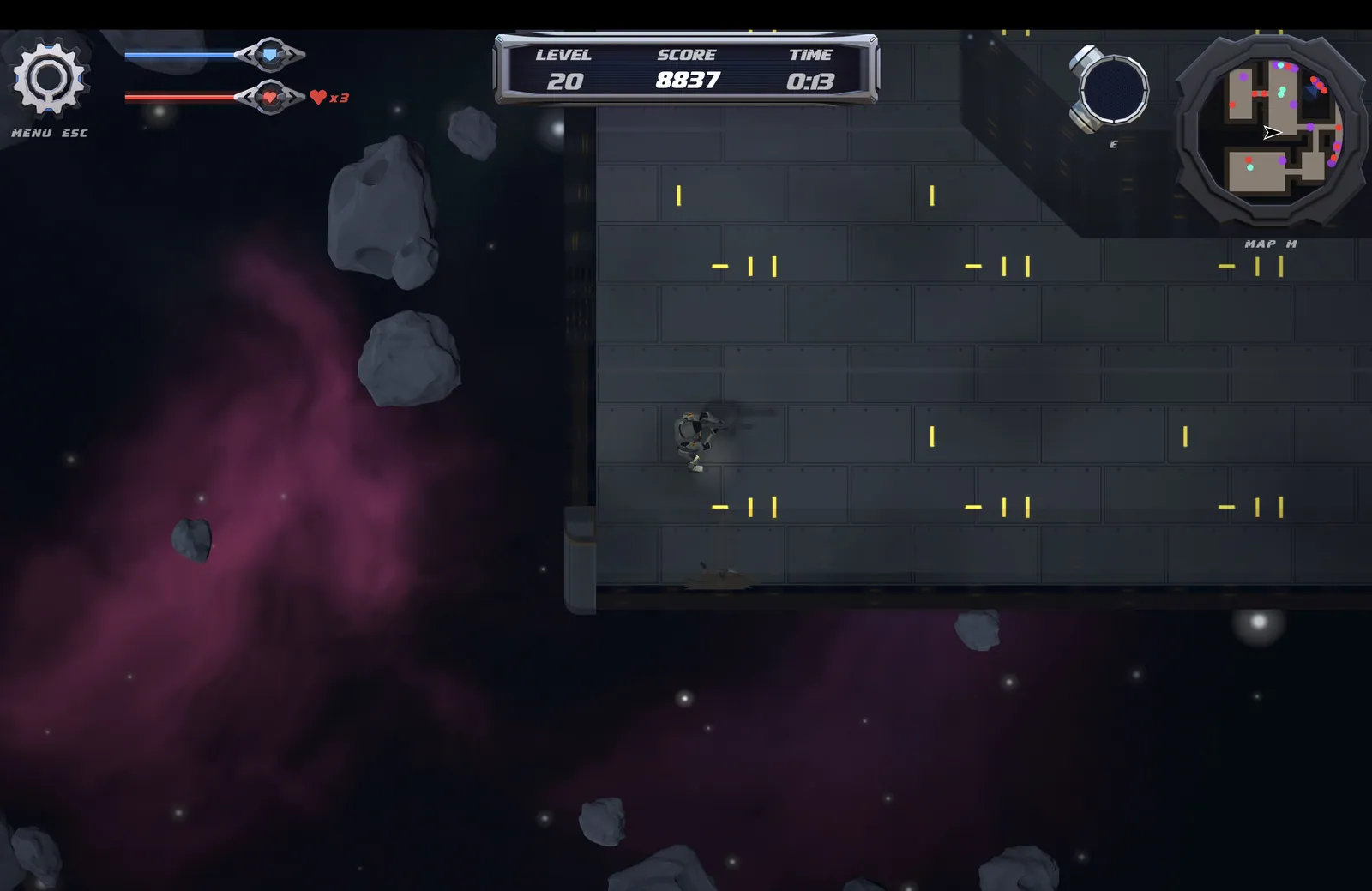
There's still a list of course. A small one turned up while I was pulling these posts together, How To Play still says you get an extra life every 20,000 points, but I doubled that to 40,000 back in September after finishing a ten deck run with a pile of lives, so that fix is going in the next update. Game Center leaderboards are the plan for 1.1, the Steam page and demo are next, and on the behind the scenes side I'll be getting into the Maya tile kit and texture generator I built for the station. Stay tuned!